I’ve written about this subject before (here and here) but think there is a need to revisit and clarify a few things. Notably, I’ve spoken with a few colleagues and others online who say they have no clue how things work or even where to start. I hope this serves as a bit of an introduction and assistance in understanding how to put your money to work for you.
To be clear, the stock market is nothing more than an exchange. Much like many of us travellers visit the local farmers’ market, there are goods for sale (produce) and the price is often settled by what people are willing to pay for it. Now, the major difference of the stock market and a farmers’ market is that when you buy produce from a farmers’ market you don’t have a say in how things are done on the farm. However, in the stock market, when you buy a stock (also known as shares in a company), then, technically, you become a part owner of that company and have the right to have your voice heard about how the company is run.
Ok, that much is clear. But how do I buy and sell stocks?
I recall one of my cousins saying that she wanted to learn how to trade stocks. I asked her if she meant trade stocks like a professional trader or simply how to buy and sell stocks on her own so she didn’t have to rely on someone else to do it. She said she didn’t know.
And this is a problem. Often when people say they want to learn “how to trade” a lot of them mean that they want to learn how to day trade like the professionals. It sounds sexy. They see it in the movies. They read about it in the news. Wow! Look at all that money! Or, even better, it’s all a conspiracy and you can’t do it yourself! It’s true, a lot of people also lose a lot of money trying it.
I’ll put it simply: anyone can learn how to buy and sell stocks on their own. That isn’t the hard part. The hard part is in knowing which stocks to buy or sell and when to buy or sell them. And even then, that isn’t overly hard. To actually buy that stock is not difficult: open an account (eg, Questrade or TD Ameritrade), put money in, click “buy”, pay a commission (usually between $5 and $10), and that’s it.
As for which stocks to buy? Here’s a simplification: There are five major sectors in Canada (financials, manufacturing and industry, consumer staples/discretionary, resource and commodities, and utilities). Buy the stock that is the biggest and has been around the longest (often known as the leader) and hold that stock. Then go do something else with your time, like get a job.
The problem becomes when you try to micro-manage your portfolio and get lost in the “noise” of the news. “But I’ll be smart about it,” they say. Yea, everyone is… and then they lose their money trying to be smart. “I’ll be like Warren Buffett!” is another common wish, yet few people are willing to read the books or do the homework that Mr. Buffett has done. Oh, and by the way, Buffett buys companies to run them, not as a side project to his day job.
It would be fair to say that some people know more than others when it comes to investing and/or business and sometimes those people do well in the markets. There are professionals who study this thing for a living, just as teachers teach for a living and know more about how to manage a classroom and develop materials for different levels of kids.
Honestly, although technically anybody can do this, not everyone should trade or invest on their own. At the very least, however, you should learn how it works and what people are talking about. You don’t need to know everything (you can’t, nor does any of the Big Money, despite what they sound like on TV) and you certainly don’t need to be glued to your computer all the time. Isn’t this supposed to create more freedom for you, not less?
Now, one other point needs to be mentioned. You’re not going to get rich over night. Nor should you want that to happen because, well, let’s be honest, your local tax man will expect his cut and capital gains taxes are huge (especially in Canada). So, the next time you think “If I made a million dollars, I’d…” do whatever you do, just remember that your local tax man will come along and request roughly 45% of that money. There seems to be this constant battle of “hate the rich” and “hate the corporations” yet everybody has a “If I made a million dollars…” idea in their head. Instead of thinking like the haters, think like the people who run successful businesses.
That being the case, when talking about the stock market it also pays to know a thing or two about how the tax system works in your country. I’d almost say forget about learning where your tax dollars are going and instead focus on how they’re taxing you and then figure out a way to legally reduce your tax bill. It’s possible, but it means you’ll need to study where your money comes from and where it’s going. People are very quick to disregard a the price of a subway ticket yet talk freely about how the big money is conspiring against the little people and controlling us all. You need to figure out how tax deductions work, that’s what the people with money did and continue to do.
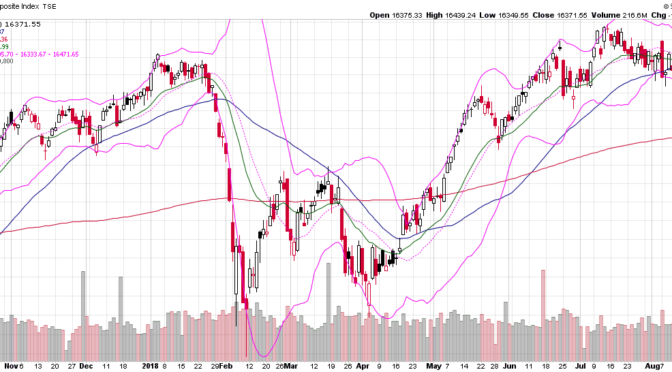
Do I need to learn how to read a stock chart?
It doesn’t hurt, but it’s not necessary.
Do you need to watch the news all the time? Definitely not, and I’d suggest you purge your newsfeed entirely as most of it is useless. Honestly, avoid news outlets like Bloomberg and MarketWatch or even “alternative” sites like ZeroHedge, it’s just a constant stream of content (is it really even news or information?)
Instead, find places that seek to educate, some of which I list below:
- Berman’s Call on BNN Bloomberg* that features Larry Berman, one of the most well-known fund managers in Canada. He talks a lot about ETFs.
- Market Call on BNN Bloomberg* in which top portfolio managers in Canada are interviewed about their views, goings on, and stock ideas.
- TSI Network – Offers “premium” paid newsletters but their website also contains a lot of useful free information. Focused more on Canadian-based investors.
- The Disciplined Investor Podcast – A US money manager based out of the state of Florida who publishes a weekly podcast for free. Not only does he offer his own insight but often interviews other industry people to get their perspective on things.
- Investor’s Business Daily – investors.com – A weekly newspaper that offers a lot of online content for free. Started by William J. O’Neil back in the 1980s and who wrote the book How to Make Money in Stocks.
*BNN and Bloomberg recently joined forces in Canada, hence the combined name. My point remains, however, that the Bloomberg news channel should be avoided for investment advice while the two programs I’ve mentioned on BNN retain their usefulness.
And if you are interested in learning more about stock charts, then I suggest you spend some time on a website appropriately named stockcharts.com, a thorough resource that offers lessons and an encyclopedia of knowledge about charting the stock market.
I hope that clarifies things a little bit more, though I know this post is really just an extension of my previous two posts. It you have any questions or concerns, let me know by way of Twitter (@stevensirski) or email (stevensirski [at] gmail [dot] com).