I’ve been thinking about getting a drone for a while but stopped short a number of times. I recall looking at them years ago and being tempted but it never made sense to get one. A lot of the drones on the market are big, heavy and, worst of all, expensive, not just for the machine itself, but for the maintenance or replacements that may be required.
As you’ll recall, last year I had the chance to fly a drone on my Uncle’s farm, a Yuneec Typhoon H4+, and that got me thinking that it may be a new type of skill to develop. I did write about it at the time, you can read that here, but that type of drone wouldn’t suit my needs because it is far too big. Not only that, the batteries kept dying and we couldn’t get them charged, so it simply became an expensive runaround.
Years ago I recall looking at the drones on the market and wondering if there would ever be a version that you could just swap out the camera. All of the drones at that time and many of the current models have fixed cameras so if you crash, then you will probably have to replace the whole thing instead of just swapping out the necessary parts. GoPro did come out with one, their Karma, but later discontinued the line as battery issues saw the drone literally fall out of the sky. So a no-go on that one.
I’d heard of cheaper and smaller models: DJI offers several drones including the Spark, Air and Mavic; Yuneec offered a small drone but reviews were terrible; the aforementioned GoPro Karma is still on sale but as of this writing, they’re still falling out of the sky and I’d rather not lose my GoPro at the same time as I lose a drone. Finally, there are pocket drones such as the KuDrone or even Xiaomi’s kids’ version. But the problem with those drones is that their cameras aren’t that good, their fly-time is limited, and you need to use your cell phone to control them which would make it even more of a nuisance to operate.
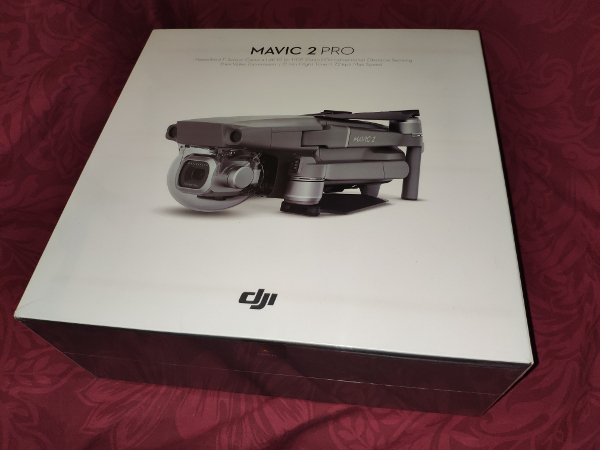
Anyway, after years of research and waiting I finally settled on the DJI Mavic Pro 2 (the non-zoom version) which was just relased. It’s a bit heavier than I thought it would be but the battery lasts 31 minutes (so I’m told) and is compact enough that it can be tossed into a backpack and taken as carry-on. I will probably buy supplemental batteries and extra propellers just in case, though it is a Chinese company and many of the parts are available there as well. I got a 128GB SD card as well so I won’t have to worry about transferring footage at the same time as swapping out the batteries.
The problem with drones, however, isn’t so much operating them but the regulations that are being put in place to restrict their usage. China itself is very conservative when it comes to permitting foreigners into their country, so a foreigner with a drone will raise even more flags. DJI does maintain a website that shows the No Fly Zones (NFZs) around the world, many of which are around airports and military installations, which does make sense.
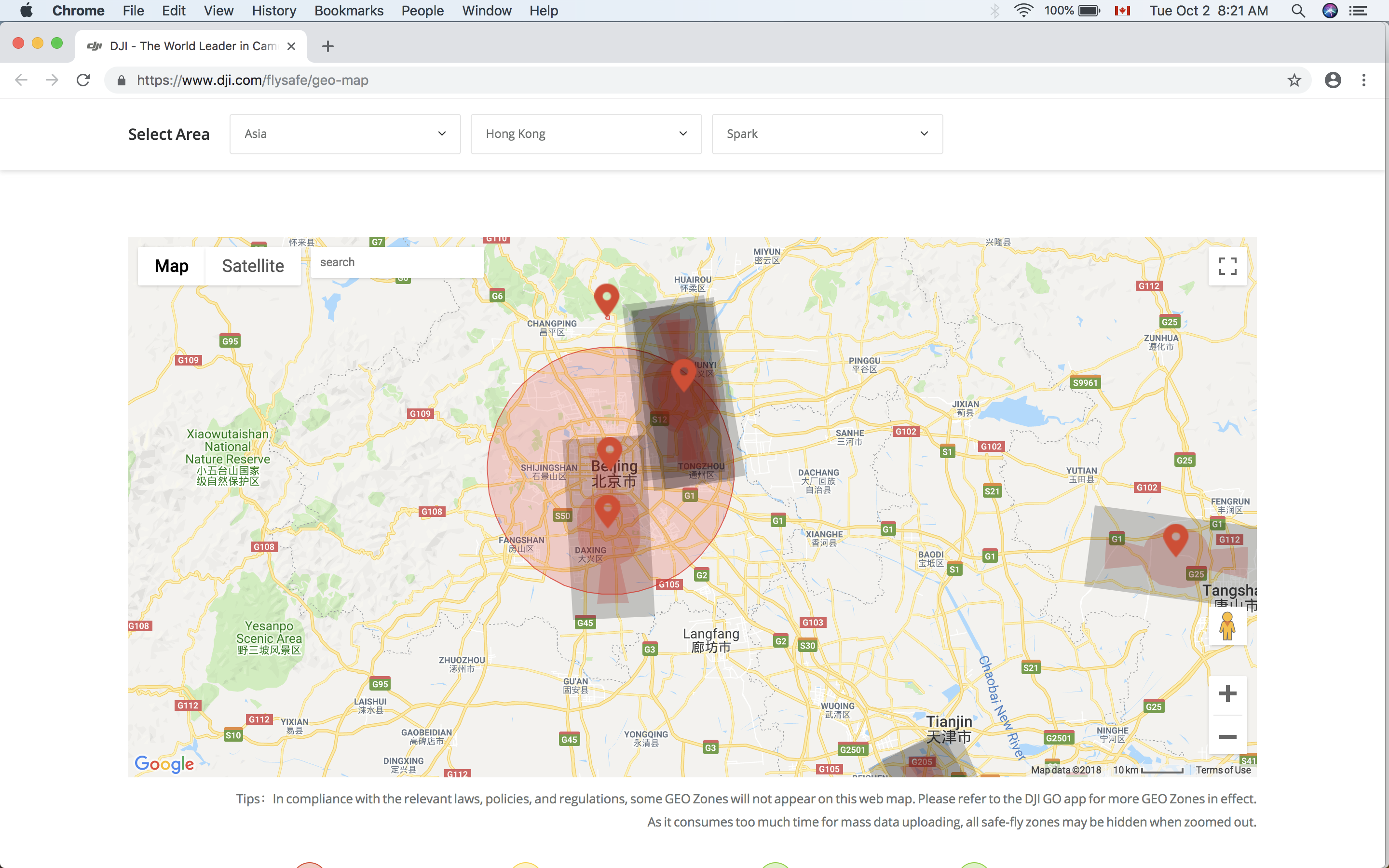
And the thought of flying the drone in any of those restricted airspaces is quickly quashed by the simple fact that the authorities don’t need to bust you while operating the drone but can bust you posting the footage afterwards, so it’s not like you can be sneaky about it.
And it’s not just China, it’s the same all over the world. For example, look at Winnipeg:
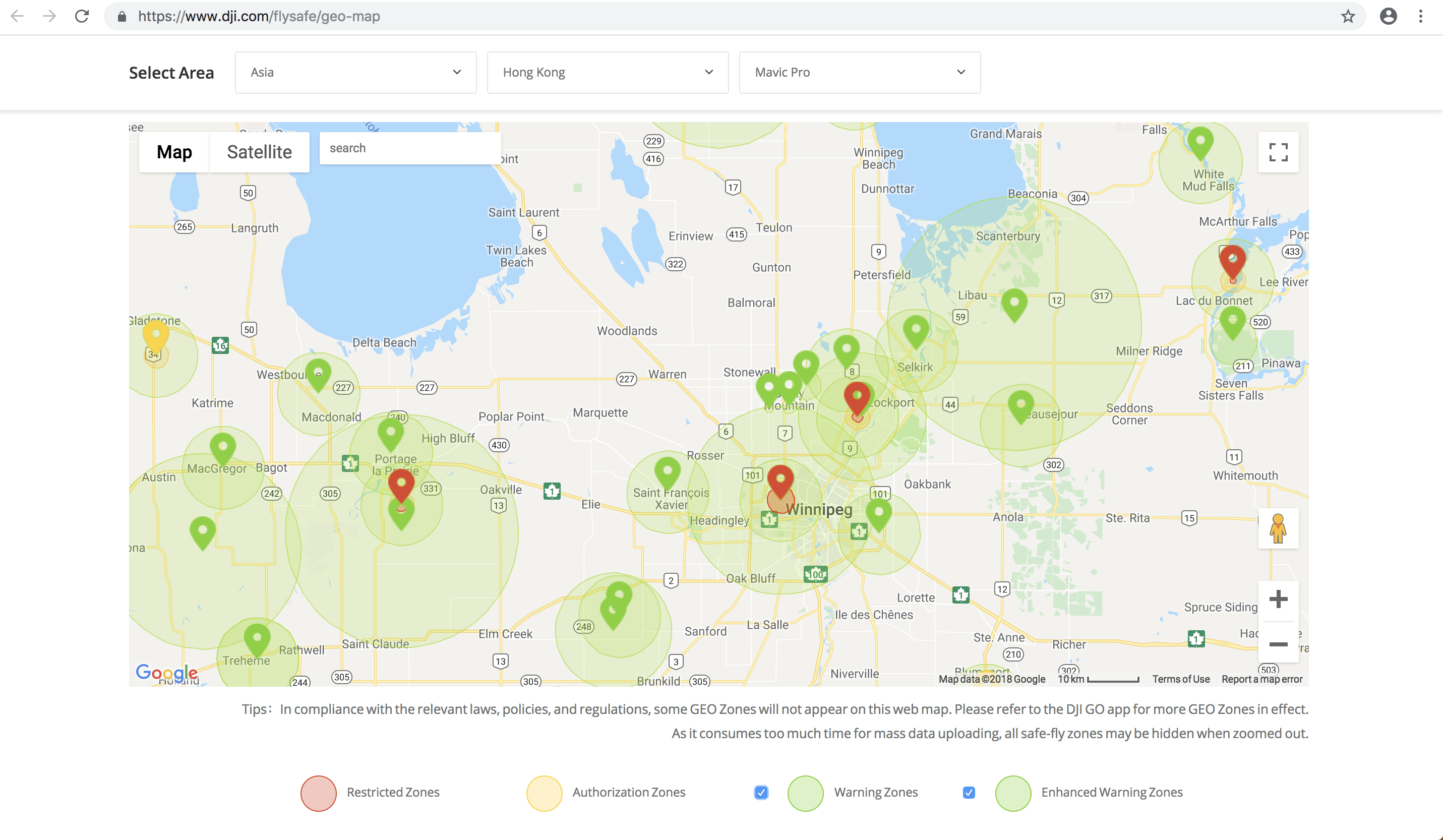
There are further restrictions based on the size and weight of the drone and whether or not you intend to commercialize the footage which basically refers professionals working for agencies or film shoots, but could be applied to anyone monetizing their footage.
Transport Canada has some information on drone usage:
So far I’ve left the drone unwrapped just in case I find out that these things have been severely restricted or that it could be confiscated at the border, then it wouldn’t make sense to even have one and I might just return it. But, you know, I look at that drone footage from last year and can’t help but be amazed. In case you need some convincing, here’s some of the rough footage we shot last year:
What do you think?